
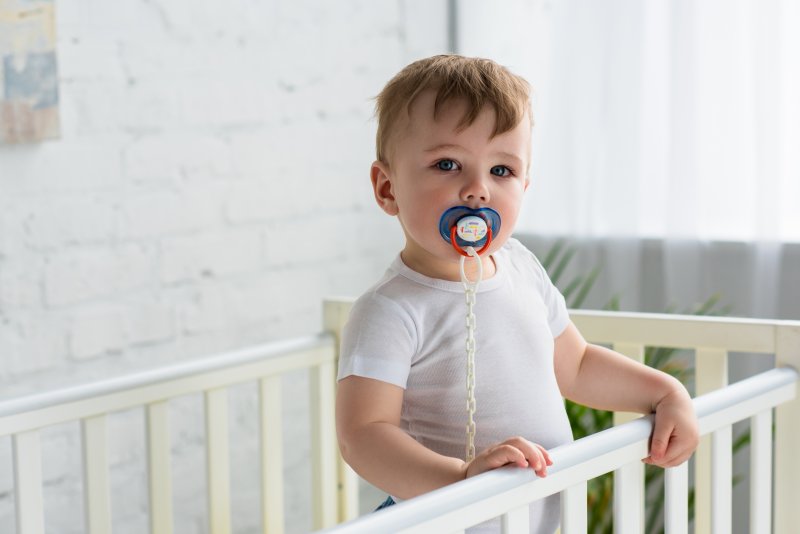
Pacifiers are among the most common tools parents use to soothe and calm their fussy babies. But how long should this method be used? Is there a downside to allowing your child to have a pacifier once they reach toddlerhood or early childhood? Most dentists agree that prolonged use poses potential dangers, but what are they? Keep reading to learn how your child’s oral development can be affected by this kind of non-nutritive habit.
What Problems Can Arise with Prolonged Pacifier Use?
If your baby or toddler is using a pacifier when they visit the dentist for the first time, you may learn when it’s a good time to help them say goodbye to their favorite “binky.” What you might not realize is that your child’s persistent need for their pacifier can lead to serious issues that affect their oral development, including:
- Pacifier Teeth: Your baby’s jaw and mouth can become misaligned, making it difficult for them to bite down comfortably and without damaging their erupting teeth.
- Cavities and Gingival Recession: If your baby’s pacifier is dipped in something sweet, it increases their chances of developing cavities and gum loss at an early age.
- Bite & Facial Changes: Pacifiers and thumb-sucking can lead to changes in the roof of the mouth, causing your baby to develop a crossbite, open bite, or overbite. These malocclusions can go on to impact their ability to speak, eat certain foods, breathe, and their self-esteem.
What Are Some Responsible Ways to Use a Pacifier?
You can take appropriate steps to ensure responsible pacifier use and minimize the risk of future issues. For example, do not dip your baby’s pacifier in anything sweet, and make sure it is cleaned regularly to prevent bacteria from transferring between the pacifier and your baby’s mouth.
Also, choose a pacifier that is the right size for your baby’s mouth – not too big or small.
When trying to find ways to help them break the habit, you can:
- Encourage and offer praise when they choose an alternative way to soothe themselves
- Provide a stuffed animal or similar toy in exchange for the pacifier
- Explain that it’s time to let another child enjoy these pacifiers and put them in the mail, letting your child say goodbye to them (just be sure not to leave them in the mailbox!)
Helping your child give up their pacifier will protect their growing teeth. By establishing a plan and staying positive and encouraging, you and your little one can say goodbye to this chapter and hello to one that includes a healthier, well-developed smile.
About the Author
Dr. Lydia Brett is a pediatric dentist who understands the reason many parents choose to use pacifiers. However, as a mother of four, she also recognizes the potential danger these calming mechanisms can have on a child’s growing smile. If you are concerned about your little one’s pacifier use, contact us at (832) 409-3998 to schedule an appointment.